Welcome to Business Insight Journal


Your Trusted Source for Strategic Business Intelligence

At Business Insight Journal, we deliver deep insights, expert analysis, and practical strategies for today’s business leaders, entrepreneurs, and decision-makers. Whether you’re scaling a startup, leading a corporate team, or navigating market changes, we provide the knowledge you need to stay ahead of the curve.

What We Offer:
In-Depth Articles – Explore data-driven reports, industry trends, and case studies across finance, marketing, tech, and leadership.

Expert Opinions – Gain perspectives from top professionals and thought leaders in the business world.

Actionable Insights – Access practical advice and tools to drive growth, innovation, and operational excellence.

Emerging Trends – Stay current with evolving market dynamics, digital transformation, and global economic shifts.

Blog

  • Understanding Fintech Monetization and Modern Revenue Models

    Understanding Fintech Monetization and Modern Revenue Models

    Fintech companies have changed how consumers and businesses manage money. From digital banking and payment apps to investment platforms and financial management tools, fintech products have made financial services faster and more convenient. But building a successful fintech product requires more than attracting users. Companies also need sustainable ways to generate revenue.

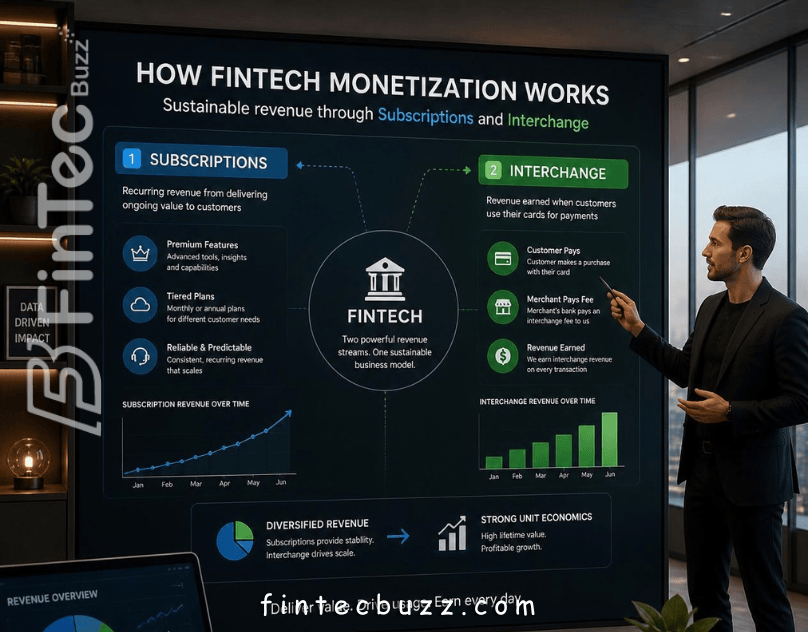
    This is where fintech monetization becomes important. Modern fintech businesses use multiple revenue streams, including subscriptions, interchange fees, lending, partnerships, transaction fees, and premium services.

    Subscription-Based Revenue

    Subscriptions are one of the most straightforward fintech monetization models. Users pay a recurring monthly or annual fee to access premium features.

    Digital banking platforms may offer paid accounts with benefits such as higher transaction limits, international payments, budgeting tools, cashback, or enhanced customer support. Investment platforms can charge subscriptions for advanced analytics, research, automated investing features, or personalized financial insights.

    The subscription model provides predictable recurring revenue while encouraging fintech companies to continuously improve their products.

    Interchange Fees

    Interchange is another important source of fintech revenue, particularly for companies offering payment cards.

    When a customer uses a debit or credit card to make a purchase, the merchant’s payment transaction generates fees that are distributed among different participants in the payment ecosystem. Depending on the business model and regulatory environment, fintech companies can receive a portion of this revenue.

    The advantage of interchange-based monetization is that revenue can increase as customers use their cards more frequently. This makes customer engagement and transaction volume important drivers of growth.

    Transaction and Payment Fees

    Many fintech platforms charge fees when users complete specific financial transactions. These can include international transfers, currency conversion, instant withdrawals, merchant payments, or other financial services.

    For businesses, payment processing can become a significant revenue opportunity. Fintech providers may charge merchants a fee for processing transactions, providing payment infrastructure, fraud protection, or related services.

    However, competition can put pressure on transaction fees, encouraging fintech companies to combine payment revenue with other monetization models.

    Lending and Interest Income

    Lending represents another major fintech monetization opportunity. Fintech companies can provide personal loans, business financing, credit products, or other forms of digital credit.

    Revenue may come from interest payments, origination fees, servicing fees, or other charges associated with lending products.

    Technology allows fintech lenders to automate applications, underwriting, and servicing, potentially reducing operational costs. At the same time, responsible lending, credit risk management, regulatory compliance, and customer affordability remain essential.

  • Why Robo-Advisors Are Not Replacing Human Advisors

    Why Robo-Advisors Are Not Replacing Human Advisors

    The Evolution of Robo-Advisors in Wealth Management

    Robo-advisors have changed wealth management, but not in the way their early founders expected. Instead of replacing human financial advisors, automation has become a core part of modern wealth management, with hybrid models combining technology and human guidance gaining strong traction.

    What Robo-Advisors Solved

    Automated investing made professional portfolio management more accessible. Lower account minimums and fees allowed more people to build diversified portfolios without needing extensive financial knowledge.

    Investors can simply provide information about their goals and risk tolerance, while the platform handles asset allocation, rebalancing, and other routine investment tasks.

    Why Human Advice Still Matters

    Pure automation has limitations, particularly when markets become volatile or financial situations become complicated. Investors may need reassurance and personalized guidance during major market declines—something automated notifications cannot always provide.

    Human support also becomes more valuable with complex situations such as business ownership, inherited assets, concentrated investments, estate planning, or international tax considerations.

    The Rise of Hybrid Wealth Management

    Established financial institutions have increasingly integrated robo-advisory technology into their existing services. As automated investing became widely available, competition shifted toward personalized advice, planning, service quality, and customer trust.

    Hybrid advisory models now combine automated portfolio management with access to human advisors, offering investors both efficiency and personalized support.

  • The Role of AI Credit Scoring in Modern Lending

    The Role of AI Credit Scoring in Modern Lending

    AI Credit Scoring: Transforming Modern Lending

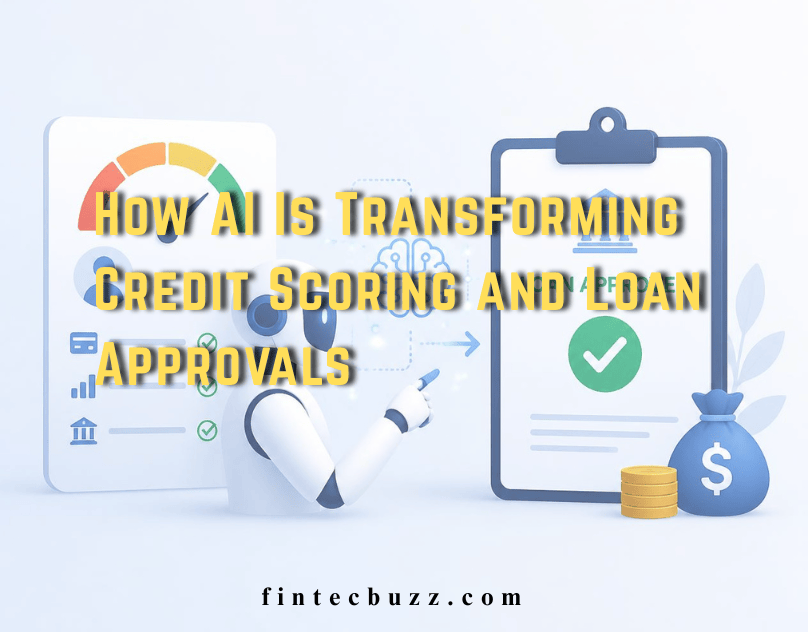
    AI credit scoring is reshaping how financial institutions evaluate borrowers, price risk, and process loan applications. By combining machine learning, predictive analytics, alternative data, and automation, lenders can assess creditworthiness more efficiently while improving the customer experience.

    The value of AI goes beyond faster approvals. With strong governance, explainability, and continuous model monitoring, AI credit scoring can help banks and fintechs expand access to credit, reduce operational costs, and build more responsive lending strategies.

    Smarter Credit Risk Assessment

    Traditional credit scoring relies heavily on credit history, income, debt, and repayment behavior. AI can strengthen these assessments by incorporating relevant alternative data, including cash flow, account balances, income trends, and spending patterns.

    Rather than simply increasing the amount of data used, lenders should prioritize data that is genuinely predictive of creditworthiness. A well-governed data hierarchy can improve model accuracy while supporting fairness, regulatory compliance, and customer trust.

    Faster and More Efficient Loan Approvals

    AI-powered loan approval systems can connect application processing, identity verification, credit checks, fraud detection, policy validation, pricing, and customer communication within a single workflow.

    This automation can shorten decision times, reduce manual work, improve application completion, and allow lenders to handle higher volumes without significantly increasing staffing. However, speed should not be the only performance measure. Lenders should also monitor approval rates, manual intervention, operating costs, fraud losses, early delinquencies, and customer retention.

    Five Steps for Responsible AI Lending

    • Establish a baseline: Measure approval rates, decision times, losses, costs, manual intervention, and customer abandonment before implementation.
    • Validate data and fairness: Review data quality, model performance, historical bias, and potential discriminatory outcomes.
    • Test in a controlled environment: Compare AI-driven decisions with existing processes before full-scale deployment.
    • Maintain ongoing monitoring: Continuously track model accuracy, risk outcomes, and fairness.
    • Strengthen governance: Ensure decisions remain explainable, transparent, compliant, and subject to human oversight where necessary.

    AI credit scoring can make lending faster, more inclusive, and more efficient—but its long-term success depends on using the technology responsibly, transparently, and with strong risk controls.

  • The Rise of Digital Lending Platforms in Modern Finance

    The Rise of Digital Lending Platforms in Modern Finance

    A decade ago, getting a business loan often meant visiting a bank, completing extensive paperwork, and waiting weeks for approval. Today, digital lending platforms can help borrowers apply online, submit documents, and receive funds within hours. This transformation is changing how individuals and businesses access credit.

    What Are Digital Lending Platforms?

    Digital lending platforms are technology-driven systems that manage the entire loan process online—from application and verification to approval, disbursement, and repayment.

    Banks, fintech companies, and credit unions use these platforms for products such as personal loans, mortgages, small-business financing, microloans, and buy-now-pay-later services. Cloud technology, APIs, automation, and data-driven algorithms help replace many time-consuming manual processes.

    How Digital Lending Works

    The digital lending process typically includes:

    Online application: Borrowers apply through a website or mobile app and submit financial information digitally.

    Identity verification: Automated systems perform KYC checks and validate submitted information.

    Automated underwriting: Platforms analyze traditional credit scores alongside alternative data such as transaction history, cash flow, utility payments, and income patterns.

    Loan decision: Algorithms quickly determine approval, rejection, or revised loan terms.

    Digital disbursement: Approved funds can be transferred directly to the borrower’s account.

    Repayment management: Platforms automate payments, reminders, and ongoing loan servicing.

    Improving Access to Credit

    Traditional lending models can overlook people with limited credit histories, irregular incomes, or small businesses without extensive financial records. Digital lending platforms can assess a wider range

  • Digital-First Banking: The Future of Financial Services

    Digital-First Banking: The Future of Financial Services

    Digital-First Finance: How Technology Is Transforming Financial Services

    Money management has rapidly moved from bank branches and desktop platforms to smartphones. Today, customers can check balances, make payments, invest, and apply for loans within seconds. This shift represents digital-first finance, where digital channels are the primary way financial services are delivered.

    What Does Digital-First Finance Mean?

    Digital-first finance goes beyond having a banking app. It means designing financial products and services around digital experiences from the beginning. Customers now expect banking apps to be as fast, simple, convenient, and personalized as other digital services they use every day.

    How Digital Applications Are Transforming Finance

    Innovative financial applications are changing how people manage money through:

    • Instant payments and transfers that make real-time transactions an everyday expectation.
    • AI-powered personalization that categorizes spending, provides alerts, tracks bills, and offers saving insights.
    • Embedded finance, which brings services such as payments, lending, insurance, and BNPL directly into non-financial platforms.
    • Robo-advisors and automated investing, making wealth-building more accessible with lower entry barriers.
    • Digital lending, which uses automated underwriting and alternative data to speed up loan approvals.

    Together, these technologies are fundamentally changing how financial services are delivered.

  • Advanced Cloud Technology: The Foundation of Modern Banking

    Advanced Cloud Technology: The Foundation of Modern Banking

    As financial institutions modernize, Advanced Cloud Technology is becoming a critical driver of the Future of Banking. Cloud platforms help banks innovate faster, modernize infrastructure, improve resilience, and deliver personalized customer experiences at scale.

    How Cloud Technology Is Transforming Banking

    Cloud-first operating models are replacing fragmented legacy systems with flexible, cloud-native architectures built around microservices, automation, containers, and real-time analytics. This enables banks to improve efficiency, scale operations, accelerate product development, and strengthen resilience.

    Cloud-native architecture also plays a central role in digital banking transformation. It allows financial institutions to deploy services independently, integrate new technologies faster, and scale workloads based on demand. Many banks are adopting hybrid cloud models to balance data security and regulatory requirements with the flexibility of public cloud technologies.

    Creating Business Value Through Cloud

    Successful cloud adoption requires more than simply moving workloads to the cloud. Banks need strategic roadmaps that connect cloud investments with business objectives, customer needs, and regulatory requirements. A phased approach—modernizing digital banking platforms, payment systems, fraud detection, and analytics first—can deliver faster results while reducing transformation risks.

    Financial institutions such as BBVA have invested in cloud modernization to improve data-driven decision-making, customer experiences, and application development.

    Cloud and AI: Powering Intelligent Banking

    Cloud infrastructure provides the scalability and computing power needed to support Artificial Intelligence and machine learning. Banks can use cloud-based AI for fraud detection, compliance monitoring, lending decisions, personalized financial products, and intelligent customer service.

    By combining AI with scalable cloud platforms, financial institutions can respond faster to changing customer behavior, market conditions, and regulatory requirements. ING, for example, has used its cloud-first strategy to strengthen digital experiences, analytics, and automation while maintaining strong governance.

  • How Smart Regulation Is Fueling Trust-Centric Fintech Innovation

    How Smart Regulation Is Fueling Trust-Centric Fintech Innovation

    Regulatory-driven innovation in fintech is no longer a contradiction—it has become a catalyst for transformation. What was once seen as a constraint is now shaping how financial products are designed, built, and scaled. Increasingly, fintech companies are embedding compliance into their products from day one, turning regulation into a competitive advantage rather than an afterthought.

    Read Full Article: How Regulatory-Driven Innovation Is Reshaping the Fintech

    Early fintech models treated regulation as something to manage after achieving product-market fit. That approach is rapidly fading. Today, licensing frameworks for digital banks, payment firms, and lenders directly influence business models, data usage, and cross-border operations. Leading fintechs now view regulation as a design principle, adopting compliant-by-architecture systems powered by modular, API-first stacks that seamlessly integrate onboarding, KYC, AML, and reporting.

    Modern fintech regulation is also dynamic, evolving alongside innovation. Open banking and open finance rules, for example, didn’t just mandate secure data access—they enabled entirely new categories such as account aggregators, smart cash management tools, and embedded finance platforms. Similarly, stricter consumer protection and transparency requirements in lending have driven the adoption of explainable credit models, behavioral analytics, and personalized disclosures, replacing opaque decision-making with trust-centric design.

    Regulation is increasingly functioning as market infrastructure. Standardized APIs, digital identity frameworks, and e-signature laws reduce coordination costs and unlock scale. This allows fintechs to build viable new business models by leveraging shared regulatory rails rather than negotiating bespoke integrations.

  • How Human-First Banking Will Shape Financial Services in 2026

    How Human-First Banking Will Shape Financial Services in 2026

    As the industry moves deeper into the decade, 2026 will be shaped by a shift from customer-first to human-first banking. This approach goes beyond selling products to understanding real human needs, positioning banks as financial health coaches rather than simple advisors. Trust in a digital world will be built through empathetic, personalized experiences that mirror the relationship customers once had with personal bankers.

    Delivering this level of hyper-personalization requires banks to process vast volumes of real-time data, accelerating the adoption of AI, big data, and progressive modernization. Instead of risky, large-scale core replacements, banks are upgrading legacy systems incrementally using multi-core strategies. Modern cores provide the real-time data foundations needed to power AI-driven services.

    Fraud prevention will remain a top priority in 2026 as criminals increasingly use AI to scale attacks. In response, banks will invest in real-time behavioral analytics, machine learning, and digital identity solutions. The move toward digital ID, supported by government initiatives, will play a crucial role in reducing fraud and strengthening customer verification.

    Another major trend is the mainstreaming of digital assets and stablecoins. Banks are actively piloting stablecoin initiatives and preparing to manage both fiat and digital currencies. This shift is further driving modernization, as legacy systems were not built for blockchain-based transactions.

  • From Legacy Systems to AI: Banking’s Next Chapter in 2026

    From Legacy Systems to AI: Banking’s Next Chapter in 2026

    As the industry moves deeper into the decade, 2026 will be shaped by a shift from customer-first to human-first banking. This approach goes beyond selling products to understanding real human needs, positioning banks as financial health coaches rather than simple advisors. Trust in a digital world will be built through empathetic, personalized experiences that mirror the relationship customers once had with personal bankers.

    Delivering this level of hyper-personalization requires banks to process vast volumes of real-time data, accelerating the adoption of AI, big data, and progressive modernization. Instead of risky, large-scale core replacements, banks are upgrading legacy systems incrementally using multi-core strategies. Modern cores provide the real-time data foundations needed to power AI-driven services.

    Fraud prevention will remain a top priority in 2026 as criminals increasingly use AI to scale attacks. In response, banks will invest in real-time behavioral analytics, machine learning, and digital identity solutions. The move toward digital ID, supported by government initiatives, will play a crucial role in reducing fraud and strengthening customer verification.

    Another major trend is the mainstreaming of digital assets and stablecoins. Banks are actively piloting stablecoin initiatives and preparing to manage both fiat and digital currencies. This shift is further driving modernization, as legacy systems were not built for blockchain-based transactions.

  • From Legacy Systems to AI: Banking’s Next Chapter in 2026

    From Legacy Systems to AI: Banking’s Next Chapter in 2026

    As the industry moves deeper into the decade, 2026 will be shaped by a shift from customer-first to human-first banking. This approach goes beyond selling products to understanding real human needs, positioning banks as financial health coaches rather than simple advisors. Trust in a digital world will be built through empathetic, personalized experiences that mirror the relationship customers once had with personal bankers.

    Delivering this level of hyper-personalization requires banks to process vast volumes of real-time data, accelerating the adoption of AI, big data, and progressive modernization. Instead of risky, large-scale core replacements, banks are upgrading legacy systems incrementally using multi-core strategies. Modern cores provide the real-time data foundations needed to power AI-driven services.

    Fraud prevention will remain a top priority in 2026 as criminals increasingly use AI to scale attacks. In response, banks will invest in real-time behavioral analytics, machine learning, and digital identity solutions. The move toward digital ID, supported by government initiatives, will play a crucial role in reducing fraud and strengthening customer verification.

    Another major trend is the mainstreaming of digital assets and stablecoins. Banks are actively piloting stablecoin initiatives and preparing to manage both fiat and digital currencies. This shift is further driving modernization, as legacy systems were not built for blockchain-based transactions.

Design a site like this with WordPress.com
Get started